Insights · Knowledge base
A library towards aRegenerative Built Environment.
Editor's pick · Curated by BLOXHUB
REGEN: Applied Science for a Regenerative Built Environment
“This program outline offers a blueprint for how cross-sector collaboration can move the construction industry from resource extraction to regenerative systems.”
Insights · all insights
Insights
How can we measure and mitigate smoldering risks in bio-based insulation?
This project investigates the fire risks and smoldering behavior of bio-based insulation materials. It aims to develop a new framework and hybrid modeling approach to overcome the limitations of current fire safety standards that restrict the use of these materials.
- Current fire safety standards like the Single Burning Item (SBI) test fail to measure smoldering risks during early or late fire stages.
- Existing research gaps prevent the definition of accurate performance criteria, restricting the use of bio-insulation in design.
How can disassembly and biogenic materials replace maintenance-free construction?
This project explores how prefabricated building systems can transition from "maintenance-free" composites to biogenic, reversible assemblies. It investigates the technical, organizational, and cultural shifts required to treat buildings as living environments maintained through continuous care.
- Reversible building principles allow for non-destructive disassembly into pure material fractions, facilitating direct reuse and high-quality recycling.
- Shifting from 'maintenance-free' composites to biogenic materials requires a cultural change toward continuous care, maintenance, and repair.
Resources · articles, interviews, reports, videos, podcasts, media
Resources
 Report
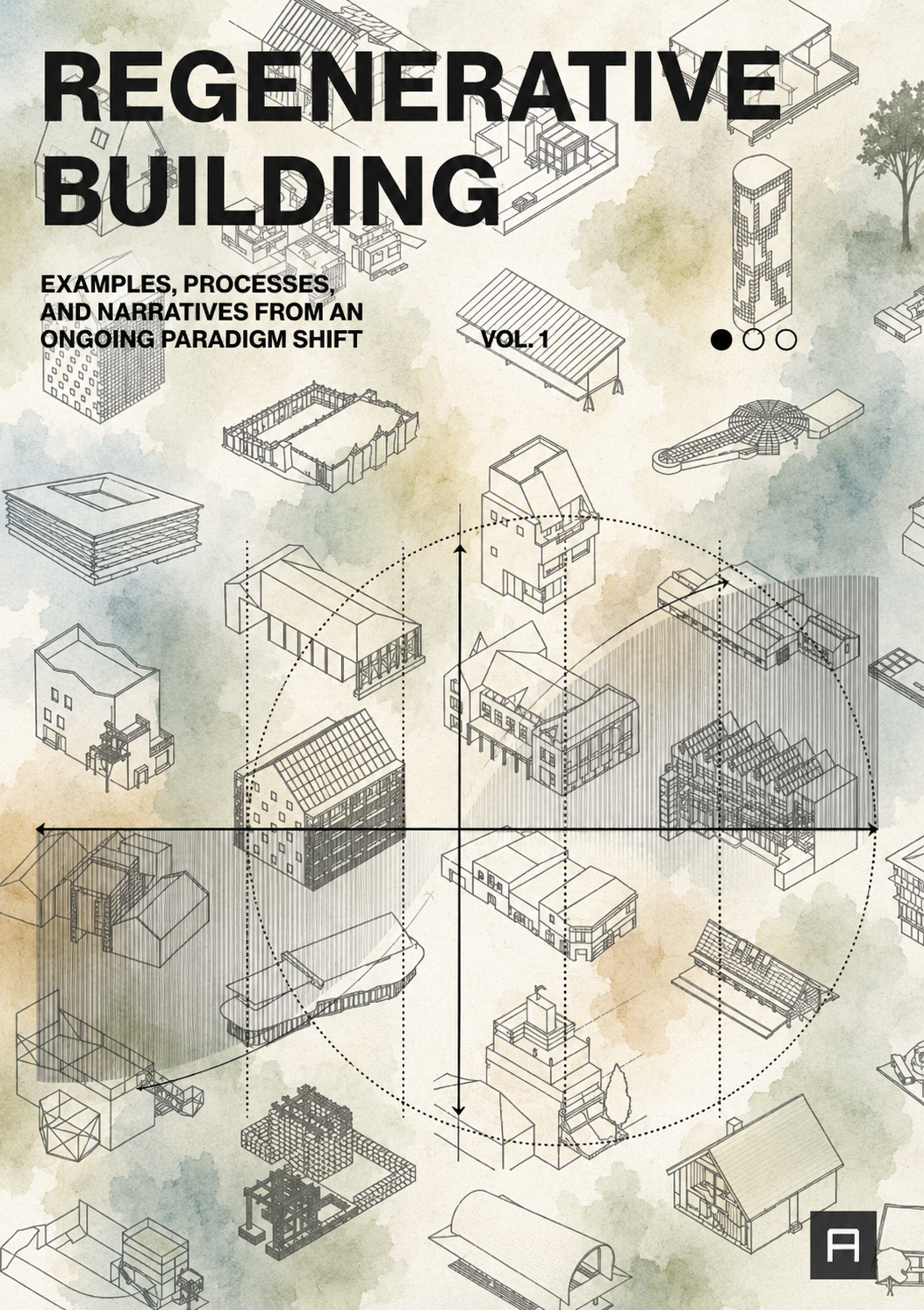
Regenerative Building: Examples, Processes, and Narratives from an Ongoing Paradigm Shift
The first in a three-part series, this report provides a literature review of the term 'regenerative building' and its core principles. It explores methods for quantifying regenerative approaches and presents a long-list of over 50 innovative international projects.
- Regenerative design demands a shift from a mechanistic, harm-reduction mindset to an ecological worldview focused on co-evolution with nature.
- Effective practice is place-based, working with nested living systems (site, community, bioregion) to realize a location's unique potential.
 Podcast
Byen forfra: Who Does the Housing Economy Work For? (In Danish)
An exploration of the financial structures underlying the construction industry and housing market, questioning who the current economic system benefits and how it impacts sustainable urban development.
- Economic arguments such as 'it's not profitable' often halt discussions on sustainable building practices and social housing.
- Technical levers like CO2 limits and tax structures are frequently used to navigate a system that favors specific financial interests.
 Report
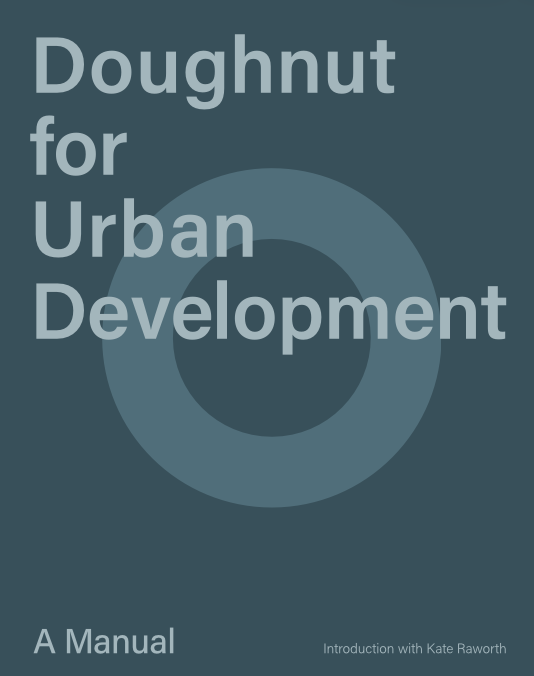
Doughnut for Urban Development: A Manual
A guide for applying Doughnut Economics to urban development projects. It provides a framework for steering the building industry towards a safe and just space for humanity, respecting both social needs and planetary boundaries.
- Adapts Doughnut Economics for the building industry, using four social and ecological lenses.
- Outlines a social foundation with 48 impact areas (24 local, 24 global) across categories of Connected, Inclusive, Equitable, and Responsible.
REPORT / 2025
Vol. 04
Co-making and Prototyping Community Housing Futures
A research report on a Living Lab in Bridport, UK, exploring how rural communities can use digital fabrication and local materials like hemp and ash timber to build affordable, community-led housing.
- Digital fabrication often relies on imported standardized materials, but 'automation-in-place' adapts these tools to local, raw timber and agricultural bypass.
- The 'Living Lab' model at Denhay Farm enables residents and builders to prototype building elements together, bridging the digital skills gap in rural areas.